Life on Earth
Came From Other Planets
Origins, Evolution, Metamorphosis, Extinction


Coming Soon! Pre-Order Your Copy Today
From Amazon.com


"New truths go through three stages. First they are ridiculed, second they are violently opposed, and then, finally, they are accepted as self-evident." --Arthur Schopenhauer

"The likelihood that life was created in an organic soup is the equivalent of discovering a computer on Mars and proclaiming it was randomly assembled in the Methane Sea." -Rhawn Joseph, Ph.D

"If Life were to suddenly appear on a desert island we wouldn't claim it was randomly assembled in an organic soup or created by the hand of god; we'd conclude it washed to shore or fell from the sky. The Earth too, is an island, orbiting in a sea of space, and living creatures and their DNA have been washing to shore and falling from the sky since our planets creation." -Rhawn Joseph, Ph.D.


Coming This June, 2009

Life on Earth Came From Other Planets

Origins, Evolution, Metamorphosis, Extinction
A New Book, by Rhawn Joseph, Ph.D.
Soon to be published by....(To be announced)

SYNOPSIS

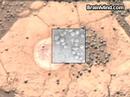
1) Life on Earth Came From Other Planets. Complex living creatures appeared within a few hundred millions years after the Earth's creation and while our world was bombarded with debris from the exploding parent star and its shattered planets. Life on Mars appeared at around the same time, and there is fossil evidence of past life on Meteors and the Moon. Life can survive in the most extreme environments.

2) The Organic Soup is a Myth. The theory of abiogenesis has been repeatedly disproved and discredited. There is no evidence, -0- that life can be created from non-life. And yet, this myth is perpetuated as established fact by the scientific community.

3) The universe is alive and continually gives birth to planets, galaxies and stars. Giant stars explode in vast supernovas generating hundreds even thousands of infant stars which come to be ringed with planets.

4) Our Sun, Solar System, and the Earth were created from the debris of an ancient exploding star around which orbited living planets just like our own. Based on isotopes, residue and microbial fossils found in meteors, it appears life on Earth and Mars may have originated on the shattered planets that had circled the parent star.

5) The seeds of life, actual living creatures and their DNA, flow throughout the cosmos and have taken root on innumerable worlds much older than our own. And just as apple seeds contain the genetic instructions for the growth of apple trees, these "genetic seeds" contain the DNA-instructions for the tree of life and the metamorphosis of all life, including woman and man: the replication of creatures which long ago lived on other planets. And this is how life on our planet began. Life is an intrinsic feature of the living, infinite universe, and life on Earth is only a small sample of life's manifold possibilities.

6) Genes act on the environment, genetically altering the environment, and the altered environment (in conjunction with regulatory genes) acts on gene selection thereby giving rise to new species perfectly adapted for a world which has been prepared for them. Every species which has appeared on Earth was genetically precoded, and the genes and genetic instructions responsible for these species were inherited from the first creatures to appear on this planet. Pre-coded does NOT mean predetermined.

7) Bacteria, viruses, and DNA, act as interplanetary genetic messengers, learning, acquiring genetic memories and inserting and transferring genes from species to species. Bacteria/viruses play a major role in evolution and metamorphosis.

8) Extinction & Metamorphosis: Like programmed cell death, extinction is the nature of life. Many species emerge, alter the environment, pass on their genes, and then become extinct having served their biological purpose.

Table of Contents

Introduction: Metamorphosis, Life On Earth Came From Other Planets

1. The Seeds of Life: Red Giants, Supernova & Solar Winds

2. Origin & Creation of the Sun, Solar System, Planets & Life on Earth

3. Life on Mars

4. The Myth of the Organic Soup.

5. Genetic Seeds of Life: Evolution of Life From Other Planets

6. Evolution & Metamorphosis: The Genetic Engineering of the Earth

7. Extinction, Evolution & Cosmic Catastrophes: From Single Cell to Dinosaurs

8. Extinction & Metamorphosis: From Mammal to Woman & Man

9. Sexuality & The Multi-Regional Evolution of Modern Humans

10. Meteors, Microbes & Viruses: Intergalatic Genetic Messengers.

11. Silent Genes, Genetic Engineering, Designer Babies & the Future of Evolution

12. The Evolution of Life on Other Planets: Even the Gods Have Gods.

13. Human Extinction & the Next Stage of Metamorphosis: Meteors, Comets, Colliding Galaxies, Galactic Warming...

References


The Evolution of Life On Other Planets... Even the Gods Have Gods


Origins of Life: Life on Earth
Came From Other Planets

by Rhawn Joseph, Ph.D.

Submitted for Review: Icarus,
3/15/2009 --Ms. Ref. No.: ICARUS-10889

To cite this article: R. Joseph (2009), Origins of Life: Life on Earth Came From Other Planets, Ref. No.: ICARUS-10889; BrainMind.com/Astrobiology.html

ABSTRACT

A comprehensive theory is presented to explain the origins of Earthly life. Life appeared a few hundred million years after the Earths creation during a period of heavy bombardment. Life on Mars may have appeared near the same time. Microbes are adapted for surviving the hazards of space, including ejection from and landing upon a planet. Microbial fossils have been discovered in fifteen carbonaceous chondrites, most impacted by supernova. The Sun and Earth were created from a nebular cloud and protoplanetary disc, the remnants of an exploding star and its planets which may have harbored life. When the parent star became a red giant, its solar winds blew away planetary atmospheres along with airborne microbes, which were deposited in a growing nebular cloud. Because the red giant lost 40% to 80& of its mass and its gravitational influences were reduced, its planets increased orbital distances or were ejected prior to supernova and may not have been atomized. The inner layers of a nebular cloud and protoplanetary disk protects against radiation and extreme cold enabling spores to survive. Microbes may have also survived within planetary debris which bombarded the Earth. As only life can produce life, then life on Earth also came from life which may have originated on planets which orbited the parent star.

Key Words: Panspermia; Origin of life; Supernova; Meteors, microfossils

1. Introduction

"Very tiny animals result from the corruption of mortal things, arise from defects of dead bodies, or from excrements, or from putrefaction of dead bodies." -St. Augustine (1957), Catholic Bishop, Church Father, Catholic Saint.

The theory that life comes from non-life, has an ancient history and has been part of Catholic Church dogma since the 4th century (Augustine, 1957). The belief in the super natural or abiotic origins of Earthly life has been adopted by numerous scientists and has been known by many names, e.g. vitalism, spontaneous generation, the organic soup, abiogenesis. However, no one has demonstrated or proved that life can be produced from non-life. By contrast, the maxim: only life can produce life, has never been discredited.

"Panspermia" the theory that life on Earth came from space, comets, or other planets, also has an ancient history (Curd 2007), and has been championed by esteemed scientists including Lord Kelvin (Thomson 1881), von Helmholtz (1872), Sir Fred Hoyle and Chandra Wickramasinghe (Hoyle & Wickramasinghe 1993, 2000), and Nobel Laureates Svante Arrhenius (1908) and Sir Francis Crick (1981).

Arrhenius proposed that spores journey through space propelled by photons. Hoyle and Wickramasinghe have identified comets and cosmic dust as a likely life delivery source. Crick theorized that highly intelligent extra-terrestrial life evolved on a planet much older than our own, and proposed purposeful contamination which he termed "directed panspermia."

In a published and forthcoming text, and series of published video lectures which have been viewed online (in total) hundreds of thousands of times (Joseph 2000, 2008) it has been proposed that living creatures arrived on Earth contained in debris produced by a supernova. The purpose of this article is to formally present this theory, and the supporting evidence, to the scientific community.

Microbes can form spores, become dormant and are adapted for surviving the hazards of space (Horneck et al. 2002; Nicholson et al. 2000), and spores can return to life even after hundreds of millions of years (Vreeland et al. 2000). Microfossils and evidence of past microbial life have been detected in fifteen carbonaceous chondrites (discussed in section 11) which originated outside this solar system, and possibly on other planets. Most have been impacted by supernova. Thus, it is proposed that the debris produced by supernova and which formed and bombarded the early Earth contained living spores.

Independent studies have provided evidence indicating life may have been present on Earth, fractionating and synthesizing carbon, throughout the Hadean eon, during the periods of heavy bombardment, which extends from 3.8 billion years (BY) to the creation of this planet 4.6 BY ago.

In 1978, the presence of microfosils resembling yeast cells and fungi, was discovered in 3.8 BY old quartz, recovered from Isua, S. W. Greenland (Pflug 1978). Further evidence of biological including photosynthesizing activity in these ancient rock formations is indicated by the high carbon contents of the protolith shale, and the ratio of carbon isotopes in graphite from metamorphosed sediments dating to the same period (Rosing, 1999, Rosing and Frei, 2004).

Carbon-isotope evidence for life has also been found in Quartz-pyroxene rocks on Akilia, West Greenland dated to 3.8 BY (Manning et al. 2006; Mojzsis et al. 1996). Some of this evidence was discovered within a phosphate mineral, apatite, which included tiny grains of calcium and high levels of organic carbon; the residue of photosynthesis, oxygen secretion, and thus biological activity.

These "biological fingerprints" from 3.8 BY were created during a period known as the ‘Late Heavy Bombardment’ (Schoenberg et al. 2002) when the Earth, the moon, and other planets were pummeled with debris that may have harbored complex life.

However, that bombardment began with the Earth's creation, and thus additional evidence for life has been discovered in the planet's oldest rocks. These include the discovery of banded iron formations in northern Quebec, Canada, consisting of alternating magnetite and quartz dated to 4.28 BY, and which may be associated with biological activity (O'Neil et al. 2008). In addition, microprobe analyses of the carbon isotope composition of metasediments in Western Australia formed 4.2 BY revealed very high concentrations of carbon 12, or “light carbon” which is typically associated with microbial life (Nemchin et al. 2008).

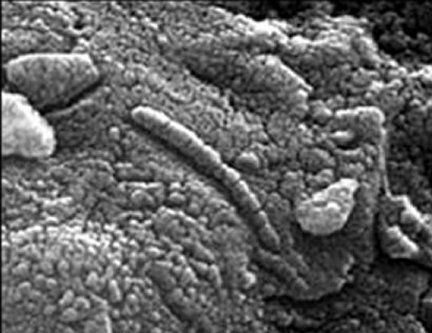
Moreover, microfossils have been discovered in ALH84001, a meteor from Mars (McKay et al 1996) variably dated from 4.5 BY (Jagoutz, 1994; Nyquist et al., 1995) to 4.0 BY (Ash et al. 1996) to 3.8 BY (Wadhwa and Lugmair 1996). This is a time period when both planets were still forming and undergoing a heavy bombardment (Ash et al., 1996; Schoenberg et al. 2002).

Thus life may have been present from almost the very beginning when the Earth was being formed from debris. As only life can create life, this indicates that life on Earth may have arrived here within that debris. Thus, life on Earth may have come from other planets.

2. Red Giants, Supernova & the Dispersal of Life

It is generally believed that our sun was created within a nebular cloud produced by a supernova nearly 5 billion years ago. A protoplanetary disc formed from the remnants of the nebular cloud surrounding the new sun, thereby giving rise to the planets of this solar system (Greaves 2005; van Dishoeck 2006).

Microbes which took up residence on Earth during the Hadean period also have as their likely source the parent star and its planets. These microbes may have been dispersed in two stages.

Using our own solar system as an example (Schroder & Smith 2008) when the parent star became a red giant, the accelerating power of its solar winds would have blown away the life-sustaining atmospheres of its planets which included airborne microbes, creating a nebular cloud at the far edges of the dying solar system.

The parent star may have lost between 40% to 80% of its mass before exploding (Kalirai, et al. 2007; Liebert et al. 2005; Wachter et al. 2008) and its planets would have significantly increased their orbital distances and may have been ejected from its solar system prior to supernova. Thus the supernova may have shattered but probably did not atomize all its planets. And deep within this debris which became part of the nebular cloud, innumerable microbes may have continued to flourish.

3. Red Giant, Solar Wind, & Wind Borne Microbes

Distinct species of over 1,8000 different types of bacteria and other microbes thrive and flourish within the troposphere, the first layer of the Earth's atmosphere (Brodie et al. 2007). Air is an ideal transport mechanism and serves as a major pathway for the dispersal of bacteria, virus particles, algae, protozoa, lichens, and fungi including those which dwell in soil and water. Microorganisms and spores have been recovered even at heights of 130,000 feet (Soffen 1965).

Between September 22- 25, 1998, and as detected and measured by NASA's Ultraviolet Imager aboard the Polar spacecraft, a series of coronal mass ejections (CME) and a powerful solar solar wind created a shock wave which struck the magnetosphere and the polar regions with sufficient force to cause oxygen, helium, hydrogen, and other gases to gush from the Earth's upper atmosphere into space (Moore and Horwitz, 1997). Normally the pressure is around 2 or 3 nanopascals. However, when the CME struck on Sept. 24, the pressure jumped to 10 nanopascals. Thus it could be predicted that some airborne microbes may have also been swept away.

Normally, such creatures might be too heavy to be lofted into space. But under red giant conditions, it can be predicted that the solar wind would strike with sufficient force to strip away atmosphere, water molecules, surface dust (Schroder & Smith, 2008), along with air-born bacteria, spores, fungi, lichens, algae, and other microbes.

As the parent star entered the red giant phase, the outer layer would have increased in size and the sun would lose mass at an accelerated rate, swept away by an increasingly dense and clumpy solar wind which streamed into space and buffeted its planets. The wind was likely accompanied by Alfven waves which interacted with, heated, and accelerated the solar wind (Suzuki 2007).

A nebular cloud would form from the ejecta, the inner layers of which were warmer than the outer layers (Ehrenfreund and Menten 2002), and which provided protection against radiation (G´omez et al. 2008). As based on related studies (Horneck et al. 2001a, b, 2002, 1994; Mitchell and Ellis 1971; Nicholson et al 2000), spores would likely survive under these conditions.

Water and a wide array of organics have been detected in nebular clouds including polycyclic aromatic hydrocarbons and the amino glycine (Ehrenfreund and Menten 2002; G´omez et al. 2008). Some of this material is abiotic and may have been produced within the molecular cloud. However, some of the organic molecules are larger than would be expected given the low range of temperatures and pressures within these clouds. Thus, the large organics may be biological and evidence of life such as that dispersed by pre-supernova solar winds. As there is no proof life can be produced from non-life this organic material should not be described as "pre-biotic."

4. Microbes Are Preadapated for a Journey In Space

Many species of microbe have evolved the ability to survive a violent hypervelocity impact and extreme acceleration and ejection into space including extreme shock pressures of 100 GPa; the frigid temperatures and vacuum of an interstellar environment; the UV rays, cosmic rays, gamma rays, and ionizing radiation they would encounter; and the descent through the atmosphere and the landing onto the surface of a planet (Burchell et al. 2004; Burchella et al. 2001; Horneck et al. 2001a.b, Horneck et al. 1994; Mastrapaa et al. 2001; Nicholson et al. 2000; Mitchell and Ellis 1971). Thus microbes are preadapted for traveling through space and it can be assumed they would not have evolved these capabilities if their entire ancestral and genetic history had been confined to Earth and the conditions of this world.

5. Low Mass Parent Star: Implications for Life

Given the paucity of evidence for nearby stars the same age as the sun, it could be assumed only a few protostars may have been produced by the supernova of the parent star. Thus, the parent star may have been only a few solar masses larger than the sun. This assumption is supported by isotopic analysis of the Murchison meteorite which is laden with microfossils and other indices of life (Section 11).

Measuments of silicon carbide (Werner et al. 1994; Nittler & Hoppe 2005) and presolar SiC grains (Savina et al. 2003) from the Murchison indicates that the grains and silicon are most likely the residue of or were produced secondary to a supernova. Supernova also impacted a number of other carbonaceous chondrites (Birck, 2004) which contain microfossils, including the Orgueil (Jadhav et al. 2006, 2007; Jadhava et al. 2006), Allende (Elgoresy and Ramdohr, 1980), Efremovka and Ivuna (Shukolyukov and Lugmaira, 2006).

An analysis of ubiquitous of FE and NI carbides in the rims of magnetite and the carbide grains within the Murchiston (Brearly 2003) indicates oxidation within the parent body of the meteor, which could have been a much larger body such as a planet or planetesimal (Ehrenfreund et al. 2001). An analysis of the presolar SiC grains and other isotopes, indicates it was impacted by the supernova of a carbon rich intermediate mass star that was between 1.5 to 3 solar masses (Savina et al. 2003).

Planets have been detected orbiting intermediate mass stars (Lovis and Mayor 2007). Thus, the Murchison and the other carbonaceous chondrites impacted by supernova, may be a remnant of the parent star's solar system, though this can't be determined at this time.

As only the estimated mass of that star is available and there is no information on nearby stars at the time of supernova, a Hertzsprung-Russell diagram cannot be applied to determine the age of the parent star at the time of supernova. However, based on the estimated ages and lifetimes of other intermediate mass stars (Pillitteri and Favata 2008) it can be estimated that a parent star of between 1.5 and 3 solar masses, was at least 1 billion to 3 billion years in age before it entered the red giant phase. Using the Earth as an example, this is enough time for microbial life to flourish on its planets.

6. Red Giants, Supernova & Rogue Planets

The surface temperature of a red giant prior to supernova is much lower than that of our sun. For example, although over 2000 times as large, VY Canis Majoris is only 3,500 K, compared with the 5,778 K of our sun (Monnier et al. 1999; Wittkowski et al. 1998). It is unlikely an intermediate mass star which becomes a red giant would have a surface temperature greater than our sun. Therefore, microbes living on planets circling at a sufficient distance would not be unduly heated, particularly as these planets would have increased their distance from the central star as it lost mass and expanded in size.

The kinetic energy of an orbiting planet is half the energy of its escape velocity. Planets as well as the central star exert gravitational effects on one another (Gladman 2005). A star loses from 40% to 80% of its mass during the red giant phase (Kalirai et al. 2007; Liebert et al. 2005; Wachter et al. 2008). Therefore its gravitational influences would be lessened. Thus, planets that had occupied an Earth-like habitable zone would have begun to increase their distance from the parent star as it lost mass and expanded in size (Schroder and Smith 2008). If these planets were larger than the Earth (and depending on other parameters) they would likely be expelled from the solar system prior to supernova (Schroder and Smith 2008).

One planet, having a mass 4.2 times that of the Earth, has been detected orbiting a main sequence star, HD 40307, located 42 light-years away towards the southern Doradus and Pictor constellations (Mayor et al. 2009). Another, planet having a mass 5 times and a radius 1.5 times that of the Earth was discovered orbiting the "habitable zone" of Gliese 581 in the constellation Libra, and with an estimated surface temperature between 0 C and 40 C (Udry et al. 2007)--a temperature range amenable to even complex creatures.

As these "super Earths" appear to be common (Mayor et al. 2009), similar "super Earths" may have orbited the parent star, but may have been expelled prior to supernova. Thus, when the parent star exploded, although its planets may have been shattered, it is unlikely they would have been atomized if they had been ejected.

Consider again the Murchison. An analysis of the isotopic composition of silicon carbide grains, indicates impact by shock waves from a supernova of a star which has lost almost all of its hydrogen mass (Pellin et al. 2002), indicating its gravitational influences were significantly reduced. These findings, coupled with results from shock-recovery experiments performed on insoluble organic matter within the Murchison (Mimura et al. 2007) are also consistent with the proposal that its parent body was expelled from the solar system prior to supernova, and was then impacted following supernova, perhaps while drifting within a planetary nebula.

7. Life Thrives in Extreme Environments

Habitable planets which are expelled and shattered might continue to harbor life. Communities of hyperthermophiles have been recovered from geothermally heated rocks 2,500 to 3500 meters beneath the surface of the Earth (Boone et al. 1995; Setter 2002), and aside 400 C rock chimneys at depths of 4000 meters (Setter 2002), at the bottom of the ocean where pressures are 9000 pounds per square inch.

Baccilus infernus, thrives at depths of 2,700 meters where the weight and pressure is 300 x that of the surface and where temperatures may exceed 117 C (Boone et al. 1995). Hyperthermophiles continue growing even in 100 C boiling water (Setter 2002) and they can survive without oxygen (Setter 2002), liberating chemicals and minerals for energy.

Microorganisms have also been recovered from cores 400 meters deep in the Canadian arctic (Gilinchinsky 2002). Viable cells dated to 3 million years have been recovered in northeast Siberia. According to Gilinchinsky (2002) "The permafrost can maintain life incomparably longer than any other known habitats" and "contain a total microbial biomass many times higher than that of the soil." "The permafrost community have overcome the combined action of extremely cold temperature, desiccation, and starvation" and "life might be preserved in permafrost conditions for billions years."

It can be predicted that a substantial number of microbes such as those normally dwelling deep beneath the surface, near volcanic substrates, or frozen within the ice, could easily survive if the host planet were shattered or ejected from the solar system, and would do so under localized conditions little different from those prior to a supernova.

8. Radiation Resistance Microbes

The shock wave of a supernova would accelerate electrons, protons, and ions and heat the interstellar medium. Incredible amounts of energy would be released in the form of radioactive isotopes, free electrons, X-rays and gamma rays. However, a significant number of microbes would be unaffected.

When subjected to life neutralizing conditions, microbes and other single celled creatures can form spores and become dormant. Further, a spore can form a highly mineralized core enclosed in heat or cold shock proteins which wrap around and protect them (Marquis and Shin 2006). They will also saturate their DNA with acid soluable proteins which alters the enzymatic and chemical reactivity of its genome making it nearly impermeable to harm (Setlow and Setlow 1995).

"In the dormant stage a spore has no metabolism and resists cycles of extreme heat and cold, extreme desiccation including vacuuum, UV and ionizing radiation, oxyidzing agents and corrosive chemicals" (Nicholson et al. 2000). Space experiments and the Long Duation Exposure Facility Mission have shown that bacteria and fungal spores can easily survive the vacuum of space and constant exposure to solar, UV, and cosmic radiation with just minimal protection (Horneck 1993; Horneck et al.1995; Mitchell and Ellis, 1971). However, survival rates increase significantly from between 30% to 70% if coated with dust, or embedded in salt or sugar crystals (Horneck et al. 1994). In fact, on Earth, bacterial spores embedded in salt crystals dated to 250 million years (Satterfield et al. 2005), survived and were brought back to life (Vreeland, et al. 2000).

Not just spores, but lichens, fungi and algae survive exposure to massive UV and cosmic radiation and the vacuum of space (Sancho et al. 2005). Lichens show nearly the same photosynthetic activity before and after space flight, and multimicroscopy investigation revealed no detectable ultrastructural changes in most of the algae and fungal cells (Sancho et al. 2005).

Microffosils resembling fungi were discovered in 3.8 million year old quartz, recovered from S. W. Greenland (Pflug 1978); a time period corresponding to the "late heavy bombardment." And vast colonies of algae were building stromatolites by 3.5 billion years ago. Thus, these fungi and algae could have survived a journey through space and may have been deposited on the Earth.

Although the full spectrum of UV rays is deadly against spores, the likelihood of a direct hit, even if unprotected while traveling through space is unlikely. Moreover, just a few meters of surface material offers more than sufficient protection for those buried deep inside (Horneck et al. 2002).

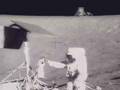
Microbes were recovered from a camera that had sat on the moon for nearly 33 months, directly exposed to the vacuum of space, constant radiation, an average temperature of 20 degrees above absolute zero, and without nutrients, water or energy source (Mitchell and Ellis, 1971). When brought back to Earth they recovered and began to reproduce.

High-energy radiation or particles from extraterrestrial space (HZE) that strike a meteor, asteroid, comet, or lunar camera, may create secondary radiation. Studies have shown that as the thickness of surrounding material increases beyond 30 cm, the dose rate and lethal effects of heavy ions, including secondary radiation, depreciates significantly (Horneck et al. 2002). B. subtilis spores can survive a direct hit even though HZE particles can penetrate thick shielding (Horneck et al. 2002).

Moreover, many species of microbe can withstand X-rays and atomic radiation, and are radiation resistant. These include Deinococcus radiodurans, D. proteolyticus, D. radiopugnans, D. radiophilus, D. grandis, D. indicus, D. frigens, D. saxicola, D. marmola, D. geothermalis, D. murrayi. These species can rebuild their genomes even if shattered by radiation (Lovett, 2006) and the same is true of yeast (Scheifele and Boeke 2008).

Microbes and spores are so small that even when bombarded with photons and deadly gamma and UV rays the likelihood they would be struck is infestimally minute. Estimates are that a spore may exist in space for up to a million years in space before it may be struck (Horneck et al. 2002). Even after 25 million years in space, a substantial number of spores would survive if shielded by 2 meters of meteorite (Horneck et al. 2002).

Likewise, those microbes, algae, fungi, and lichens dispatched from the surface of their home planets by an increasingly powerful solar wind prior to supernova, and which became part of the growing nebular debris field, would have been protected. The central layers of a molecular cloud shields against deadly gamma and cosmic rays (Ehrenfreund and Menten 2002) and are sufficiently warm that ice evaporates (van Dishoeck 2006),

Further, many species of bacteria and microbes form colonies. Those on the outer layers, if killed, create a protective crust, blocking out radiation and protecting those in the inner layers from the other hazards of space (Nicholson et al. 2000). Therefore, be they buried within rock, ice, or some other stellar material, colonies of living microbes could provide their own protection.

Clearly, these extraordinary life-sustaining capabilities were acquired after repeated and prolonged ancestral experiences within an interstellar environment involving journeys through space and from planet to planet. Microbes are perfectly adapted for a life in space and could not have evolved these capabilities if their entire ancestral and genetic history had been confined to a life on Earth.

9. Planet Formation, Rogue Worlds, & Spore Survival

A supernova creates tremendous shock waves, shattering its planets, and expelling most of the star and remaining planetary debris into the surrounding interstellar medium. This debris eventually becomes part of the surrounding nebular ring created by the solar winds, planetary atmospheres, and expelled mass of the dead star (Greaves 2005, van Dishoeck 2006).

Over hundreds of thousands of years and in response to cosmic shock waves and radiant energy produced perhaps by nearby exploding stars, the debris within these clouds begins to clump together, generating tremendous amounts of energy as they grow larger and denser, until finally they ignite, creating dozens, hundreds, even thousands of proto-stars (Hester et al. 2004). According to the most conservative estimates it could take a hundred million years for a new sun to form (Montmerle et al. 2006). These young stars are surrounded by a debris field which flattens and forms a protoplanetary disc.

Like the nebular cloud (Ehrenfreund and Menten 2002), the inner layers of a protoplanetary disc is not easily penetrated by UV photons, gamma and cosmic rays or radiation from the sun (van Dishoeck 2006). The central layers provide a protective environment for microbial survivors.

Planet formation proceeds at a relatively rapid pace, from a few hundred years for a small rocky planet the size of the Earth to one million years for Jupiter and Saturn-sized gas giants (Kokubo and Ida 2002) depending on the initial disk mass. Computer models and observations of planet-formation have given us an understanding of the mechanisms (Kokubo and Ida 2002; Raymond et al. 2007). Within just a few thousand years the remnants of the supernova and the nebular cloud which surrounded the proto-sun, begin to flatten out into a swirling circular proto planetary disk. After just a few spins around the new proto-star, islands of debris begin to collide and clump together forming moon-like planets, increasing in size by accretion (Goldreich et al. 2004).

According to the most conservative estimates, if mechanisms of accretion are very slow, it could take up to a million for a massive solid planetary core to form. Then it would quickly snow ball in size through clumping and as debris continued to crash into it (Montmerle et al. 2006).

However, Greaves et al. (2008) discovered a protoplanet which was created 2,000 years ago, circling a young star HL Tau, which is 100,000 years old.

Planetary cores may also be comprised of the remains of the shattered planets which had been expelled from the solar system of the parent star prior to supernova. These shattered rogue planets could have harbored spores, microbes, viruses, bacteria, lichens, yeast, and algae.

Survival of these broken planets, and their presence within the protoplanetary disc would explain why Uranus, Mars, the Earth, and Mercury may have been struck by wayward worlds during the early years of solar system formation (Gladman 2005; Goldreich et al. 2004; Nimmo et al. 2008). For example, around 4 billion years ago, a Mars-sized planet may have hit the Earth with so much force that the ejected mass may have come to form the moon (Belbruno and Gott III 2005; Poitrasson et al. 2004, Rankenburg et al. 2006).

Around 4 billion years ago, the northern plains of Mars was gutted by a planet-sized body which left an elliptical depression 6,600 miles long and 4,000 miles wide (Andrews-Hanna et al. 2008). The planet Mercury may have also suffered a collision which left a titanic impact basin. Uranus was apparently struck so hard by an Earth-sized body that its rotation axis tilted sideways, nearly into the plane of its revolution about the Sun (Bergstralh et al. 1991).

Thus, there is considerable evidence that planet-sized objects were careening through the solar system during its early stages of formation and in directions and trajectories different from the other planets. It also appears that the sun and its planets had become established within a 100 million years.

A 100 million years is more than enough time for any surviving life forms contained in the remnants of the parent star's shattered planets or the nebular cloud or the protoplanetary disk to find safe harbor within a new world made up of this debris. Some microbes become dormant and can rewaken even after 250 million years [Vreeland et al. 2000]. In fact "living bacteria" have been discovered and "isolated from salt deposits from the Middle Devonian, the Silurian, and the Precambrian" making some of them over 600 million years in age (Dombrowski 1963).

Thus microbes may survive from 250 million to 600 million years. However, only one microbe had to survive, and once on Earth could cover the planet in bacterial offspring within a few months.

10. Extraterrestrial Contamination of Earth by Microbes

Experiments have shown that microbes can survive the shock of a violent impact casting them deep into space (Mastrapaa et al. 2001; Burchell et al. 2004; Burchella et al. 2001). Further, a substantial number could easily survive the descent to the surface of a planet (Burchella et al. 2001; Horneck et al. 2002).

When meteors strike the atmosphere, they are subjected to extremely high temperatures for only a few seconds. If of sufficient size, the interior of the meteor will stay relatively cool, with the surface material acting as a heat shield. Thus the heat does not effect the material uniformly. The interior may never be heated above 100 C (Horneck et al. 2002), whereas spores can survive post shock temperatures of over 250 C.

11. Meteors & Microfossils.

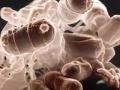
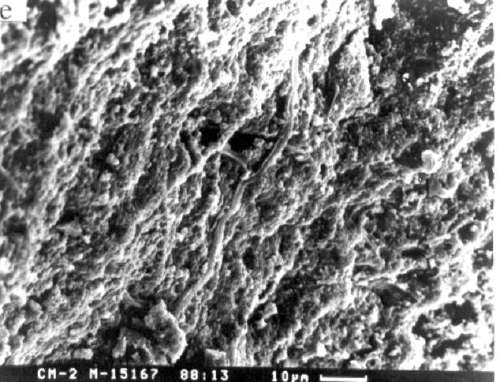
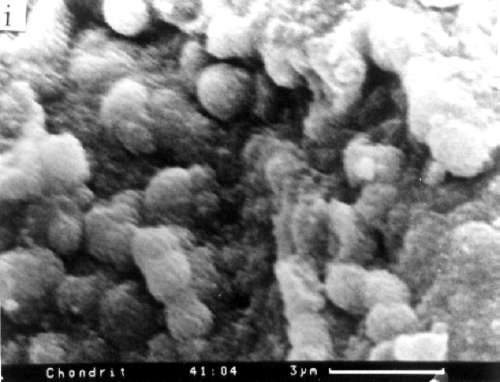
Microbial fossils have been found in fifteen carbonaceous chondrites including the Murchison (Claus and Nagy 1961; Hoover 1984, 1997; Pflug 1984), Ivuna (Claus & Nagy 1961), Orgueil [Hoover 2004; Nagy et al. 1961,1963a,b; Claus and Nagy 1961), Allende (Folk and Lynch 1997; Zhmur and Gerasimenko 1999), and Efremovka (Zhmur and Gerasimenko 1999; Zhmur et al. (1997). The fossilized impressions of nanobacteria, extremophiles, and colonies resembling cyanobacteria have been detected by several independent investigators and NASA scientists.

Organic material and biogenic hydrocarbons believed to have been produce by extraterrestrial creatures, and organized elements and cell structures that resemble fossilized algae were identified as indigenous to the Orgeuil (Claus & Nagy 1961; Nagy et al. 1962; Nagy et al. 1963a,b,c). Smooth filamentous and spherical skins surrounding grains of inorganic material were discovered, and many were doubled like the walls of biological cells. Some of the skins resembled microscopic fungi.

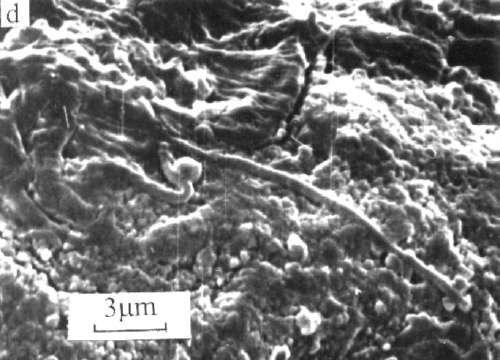
Further study of the Orgeuil and Ivuna meteorites using an electron probe and electron microscope, revealed the presence of microfossils (Nagy et al., 1962, 1963a,b), some of which were very similar to purple photosynthetizing bacteria belonging to the species Rhodopseudomonas rutilis (Pflug 1984). Additional confirmation was provided by Richard Hoover of NASA, who discovered, using NASA's Field Emission Scanning Electron Microscope, fossilized colonies resembling cyanobacteria (Hoover 1984). These fossils were found in a freshly fractured, interior slice of the Orgueil meteorite, making it almost impossible they are due to contamination.

Pflug (1984), discovered virus particles and clusters of an extensive array of microfossils within the Murchison meteorite, similar to terrestrial bacteria such as methanogens and Pedomicrobium, a flowering bacteria which feeds on metals. Pflug (1984) used acid to disolve the mineralized portions and identified numerous fossil like structures nearly identical to those found in ancient terrestrial rock and iron banded formations in Gunflint Minnesota --these formation extend backwards in time to 4.2 bilion years ago.

These results were confirmed by Hoover (1997) who discovered fossiled bacteria deep within the Murchison meterorite which resemble colonies of living cyanobacteria. According to Dr. Hoover (1997), "the fossils were seen in freshly broken pieces of the meteorite so the chance that they were earthly contaminants is low. The chemical evidence around the microfossils is most readily explained as the result of biological activity."

As summed up by Dr Hoover (1997): "The Murchison forms represent an indigenous population of the preserved and altered carbonized remains (microfossils) of microorganisms that lived in the parent body of this meteorite at diverse times during the last 4.5 billion years."

Fossils of microoganisms, cynobacteria and coccoid bacteria similar to the Synechococcus genera were found inside the Efremovka meteorite (Zhmur and Gerasimenko 1999). Zhmur et al. (1997) conducted a "comparative analysis of bacteriomorphic structures from the carbonaceous meteorites Murchison, Efremovka, and Allenda" and the "morphology of microorganisms of modern and ancient cyanobacterial community." They concluded that fossils found on these three meteors are the "fossilized remnants of microorganisms. The lithified remnants are tightly conjugated with the mineral matrix, removing the possibility they are contaminants."

The Ivuna, Orgueil, Murchison, Allende, and Efremovka meteorites are all carbonaceous chondrites. Carbonaceous chondrites typically contain a high abundance of water-bearing minerals, organics and biologically related compounds (see e.g. Botta and Bada, 2002; Hoover 2006; Sephton 2002).

Numerous independent research groups have detected the nucleobases for DNA and RNA within carbonaceous chondrites, including adenine, guanine, uracil, as well as melamine (Hayatsu, 1964; Hayatsu et al. 1968, 1975; Hayatsu et al. 1968; Folsome et al. 1971,1973; Lawless et al. 1972; Van der Velden and Schwartz, 1977; Stoks and Schwartz 1979, 1981; Martins et al. 2008). These organics are extra-terrestrial in origin (Van der Velden and Schwartz 1977; Martins et al. 2008) and were most likely produced biologically (Hoover 2006). As only life can produce life, these are not pre-biotic.

Amino acids and nucleobases for DNA and RNA, including adenine, guanine, alanine, glyciine and isovaline were also discovered in the interior of the Orgeuil (Hayatsu 1964; Hayatsu et al. 1968; Folsome et al. (1971, 1973; Lawless et al. 1972). Carbon isotopic measurements demonstrated these acids were extraterrestrial and originated in an environment with water and a high concentration of organic carbon. Thus, they are likely biological in origin.

The presence of DNA and RNA fragments are also an indication of extraterrestrial life. The genomes of living creatures journeying through space, can be fractured and broken if struck by radiation (Dose et al. 1995). Thus many meteorities contain fragments of DNA.

The Murchison also contains an extensive array of organic compounds including nitrogen bases and over 70 different amino acids and a preponderance of left-handed aminos which are characteristic of life (Cooper et al. 2001; Cronin et al. 1993). These include guanylurea, triazines, aliphatic amines, a pyrimidine, and purines, e.g., adenine, guanine, uracil, (Hayatsu et al. 1975; Folsome et al. 1971, 1973; Stoks and Schwartz, 1979, Van der Velden and Schwartz, 1977, Martins et al. 2008). Additional study found sugars, organic residue and vesicles that had formed organic compounds (Dreamer 1985; Dreamer and Pashley 1989; Lawless & Yeun, 1979; Yuen et al. 1984). These include fatty acids similar to the albumin of egg yolk.

In addition, Hoover and colleagues (Hoover, 1997, 2006; Hoover and Rozanov, 2003; Hoover et al. 1998, 2003, 2004) have examined a number of additional carbonaceous meteorites (i.e., Acfer, Alais, Dar al Gani Kainsaz, Karoonda, Mighei, Murray, Nogoya, Rainbow, Tagish Lake) and have detected microstructures similar to nanobacteria (50–400 nm) and spherical bodies (1 µm–20 µm) embedded in the meteorite matrix, resembling cocci, chroococoid and cyanobacteria.

Many of these meteors have been impacted by supernova (Birck 2004; Jadhav et al. 2006, 2007; Elgoresy and Ramdohr, 1980; Shukolyukov and Lugmaira 2006) and predate the origin of this solar system.

12. Discussion: Contamination & the Origin of Earthly Life

Critics commonly dismiss all evidence of microfossils in meteors by claiming contamination. Likewise, evidence for the presence of life during the Hadean eon have also been attacked as due to contamination.

However, claims of contamination are not proof of contamination. No one has ever conclusively demonstrated this overwhelming body of evidence, from numerous independent investigators, is in fact due to contamination.

If these findings of microfossils are due to "contamination" then we must ask: why does this "contamination" only occur in stony meteorites? As reported by Hoover (2006), ten non-carbonaceous meteorites were studied including iron meteorites. Not one was found to contain microfossils or evidence of life.

Innumerable Earthly microbes feast on metals. It is not likely that microbes from Earth would leave their fossilized signatures deep within stony meteors, but avoid those consisting of silicates, irons and other metals.

Iron meteorites are believed to have originated in the molten core of a much larger body, and thus would never have been expected to harbor life. By contrast, many chondrites, although linked to comets, likely originated as part of the deep surface layers of a planet or planetesimal (Ehrenfreund et al. 2001) and are similar to rocks found on the surface of the Earth. As such chondrites and not iron meteors would be expected to harbor life prior to crashing to Earth.

For example, mineralogical and petro-graphic evidence and the presence of carbonates and sulfates within these chondrites indicate considerable aqueous activity (Fredriksson and Kerridge, 1988; Bostrom and Fredriksson 1966; Kerridge, 1967) and possibly an original environment similar to permafrost (Dufresne and Anders 1962). When coupled with oxygen isotope data (Clayton and Mayeda 1984) it appears these chondrites were not formed in a nebular cloud. In fact, as based on an analysis of the amino acids of the Orgueil, Ivuna and Murchison meteorites it is possible that each originated on a different planet (Ehrenfreund et al. 2001).

Given these different histories, chondrites would be expected to have been infiltrated with microbes before they struck the Earth. The same would not be expected of iron meteors. If due to contamination, both types of meteors should contain microfossils and they do not.

The question of contamination is not an argument against extra-terrestrial life, but instead explains how life originated on this planet: via contamination.

No one has ever demonstrated that life can be produced from non-life. The maxim: only life can produce life, has never been discredited. Therefore, based purely on the facts and scientific evidence, the only reasonable explanation is that the first living creatures to appear on this planet were produced by other living things which arrived on Earth safely encased in the debris which was bombarding this world during the Hadean eon.

The evidence detailed in this paper provides a scientific explanation for how life originated on Earth, and why there is evidence of biological activity in banded iron formations dated to 4.28 billion years ago (O'Neil et al. 2008), within metasediments in Western Australia formed 4.2 billion years ago (Nemchin et al. 2008), and thus why life appeared in the oldest rocks on Earth while the planet was still forming. Likewise, the presence of life within extra-terrestrial debris accounts for the biological activity within rock formation located in West Greenland, and the nearby Akilia island dated to almost 3.9 billion years in age (Manning et al. 2006; Mojzsis et al. 1996) and in 3.8 million year old quartz, recovered from Isua, S. W. Greenland, and which included microfossils resembling yeast cells and fungi (Pflug 1978). Independently obtained evidence of biological activity including photosynthesis was also discovered in this area dated from the same time period (Rosing 1999, Rosing and Frei 2004).

Furthermore, microbe infested meteors which bombarded the inner planets during the Hadean era can also account for the evidence of microbial life in a meteor from Mars (McKay et al 1996) which has been variably dated from 4.5 to 3.8 BY (Ash et al. 1996; Jagoutz, 1994; Nyquist et al., 1995; Wadhwa and Lugmair 1996).

13. Conclusion

"If Life were to suddenly appear on a desert island we wouldn't claim it was randomly assembled in an organic soup or created by the hand of god; we'd conclude it washed to shore or fell from the sky. The Earth too, is an island, orbiting in a sea of space, and living creatures and their DNA have been washing to shore and falling from the sky since our planets creation" (Joseph, 2000).

Evidence for biological activity appears in the oldest rocks on Earth, during a period of heavy bombardment while this planet was forming. Biological activity in a meteor from Mars dates from the same period.

Microfossils have been detected in fifteen carbonaceous chondrites, almost all of which have been impacted by supernova, and several of which may have originated on planets that predated the origin of this solar system.

Our sun and solar system were created from the nebular debris spawned by a red giant which exploded in a supernova, nearly 5 billion years ago. The sun and our solar system may have been created within 100 million years of this explosion.

Spores can survive from 250 to 600 million years; which is more than enough time to take up residence on planets made up of this debris. Bacteria are perfectly adapted for surviving the hazards of space, and could not have acquired these abilities if their ancestral experience had been confined to Earth.

Life on Earth appeared while this planet was still forming. There is no proof life can be created from non-life. As only life can produce life, only panspermia is a viable scientific explanation as to the origin of Earthly life. The first life forms to appear on Earth were produced by other living creatures who were likely encased in debris ejected by the parent star nearly 5 billion years ago.

Life on Earth, came from other planets.

REFERENCES


The Origin of Life:
Life on Earth Came From Other Planets
Myth of the Organic Soup
Life on Mars, Meteors, The Moon
Life in Extreme Environments


Rhawn Joseph, Ph.D.
The Origin of Life: Life On Earth Came From Other Planets
Video Chapters


The Origin of Life, Evolution, Metamorphosis.

The universe is alive and forever recycles and gives birth to planets, galaxies and stars.

Giant stars incredibly vast in size, explode, giving birth to hundreds even thousands of infant stars, which come to be ringed with living planets, many just like our own.

And this is how our own story begins....

The seeds of life, actual living creatures and their DNA, flow throughout the cosmos and have taken root on innumerable worlds much older than our own. And these genetic seeds contained in the DNA instruction for the metamorphosis of all life, including woman and man...and this is how life on our planet began.

Extinction is how our story may end.

For thousands of years humans have gazed into the heavens pondering the nature of existence, asking: "How did life begin?" "Are there people on other planets?" "Are we alone in the vastness of the cosmos?" Humans have long stared into the abyss and the abyss has stared back.

Answers and explanations have ranged from religious beliefs in a creator god, to the magical thinking of modern day scientists who embrace a theology of miracles: preaching that life came from non-life in a supernatural organic soup.

The likelihood that life and its DNA emerged from an organic soup, or undersea thermal vent -at least on Earth- is the equivalent of discovering a computer on Jupiter and then arguing that it was randomly assembled in the Methane Sea.

Only life can give rise to life. Only DNA can give rise to DNA--the machinery of life. Every attempt to prove otherwise has miserably failed.

If life were to suddenly appear on a lifeless, desert island, we would not pretend it was randomly assembled in an organic soup, or created by the hand of god, but that it washed to shore or fell from the sky.

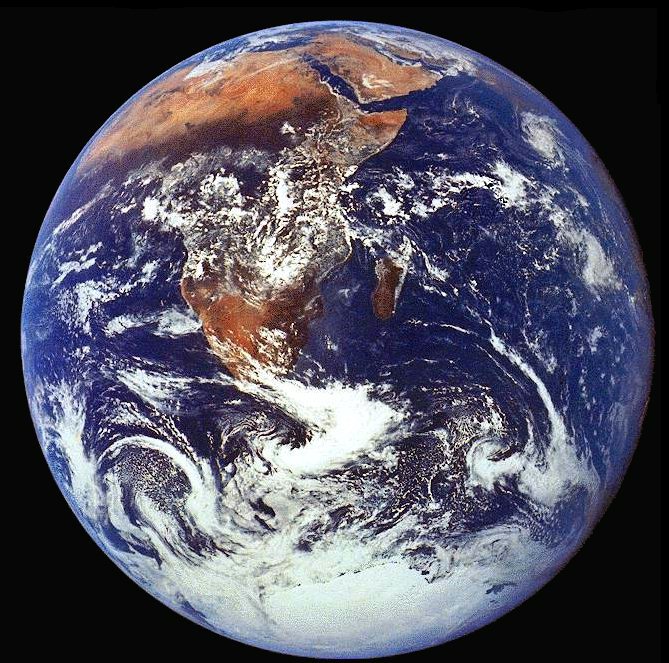
The Earth too, is an island, orbiting in a sea of space, and living creatures, and their DNA, have been washing to shore and falling from the sky, since the Earth's creation.

The first creatures on earth, came from other planets.

For 800 million years after our planet's creation, the Earth was continually bombarded by gigantic meteors, asteroids, and mountains of frozen ice, with the first evidence of Earthly life, highly complex living creatures, appearing immediately thereafter. As only life can produce life, then the first creatures to appear on Earth must have been contained in that debris, and came from other planets.

The evidence supporting this rather astounding proposition is extensive, and includes fossils of past life found in 1) three meteors from Mars, 2) five meteors which originated outside the solar system, and 3) three soil samples from the moon. In 1969, when a camera from the Surveyor 3 was retrieved from the lunar surface and returned to Earth, it was found to be coated with "organic material of unknown origin" and a single dormant microbe was discovered inside.

Life can exist in almost any environment, from the freezing to boiling, flourishing at the bottom of the frigid Antarctic ocean, or in liquid fire under 9,0000 crushing pounds of ocean pressure. When threatened with death, life becomes dormant, and may awaken even after 250 million years have passed. Since life exists everywhere on Earth, it is reasonable to assume life can exist anywhere in the cosmos.

Life on Earth came from other planets.

Cosmic collisions are commonplace, not only between meteors and planets, but entire galaxies, and life has been repeatedly tossed into the abyss...only to land on other planets.

The genetic seeds of life swarm throughout the cosmos, and these genetic "seeds," these living creatures, fell to Earth, encased in stellar debris which pounded the planet for 700 millions years after the creation.

And just as DNA contains the genetic instructions for the creation of an embryo, neonate, child, and adult, and just as modern day microbes contain "human genes" which have contributed to the evolution of the human genome, these "seeds," these living creatures, contained the DNA-instructions for the metamorphosis of all life, including woman and man.

DNA acts to purposefully modify the environment, which acts on gene selection, so as to fulfill specific genetic goals: the dispersal and activation of silent DNA and the replication of life forms that long ago lived on other planets.

*****

SCIENTIFIC REVOLUTIONS

The universe is ageless, infinite, and has no beginning and no end. However, the nature of the human mind require endings and beginnings, and thus charlatans and priests invent myths such as the big bang, the organic soup, and Darwinism to give the children "once-upon-a-time" myths to believe in, myths that have beginning and endings.

Throughout the ages, and as is true today, some of what has passed for "scientific fact" has been based on faith and dogma; which is why the temple priests of science often protect the faith, and the status quo, by attacking and ridiculing those heretics who threaten to topple and shatter the altars of their idols. The dustbins of history are laden with discarded "scientific facts" and those who believed in them(Kuhn, 1970). Until the 16th century, it was a "fact" that the Earth was at the center of the solar system and the universe. Until the 19th century it was scientific "fact" that "rocks do not fall from the sky" and that meteors did not exist. Until the 20th century, it was scientific "fact" that interstellar space was permeated by a viscous "ether." In the 1920s, articles and editorials appeared in leading scientific journals ridiculing those rocketeers who dreamed of soaring through space, explaining that it was a scientific "fact " that rockets would be unable to propel themselves beyond the Earth because of the lack of atmosphere or air. Until the year 2000, it was a scientific fact that the speed of light was a constant and that nothing could travel faster than the speed of light.

And all these "scientific facts" have been proved false.

Now we are told that life emerged from an organic soup, and then evolved following the natural selection of "random mutations." And yet, the proverbial organic "alphabet" soup was missing all essential ingredients, including DNA. There was no organic soup, at least not on Earth.

The theory of the organic soup is a myth, based on a theology of miracles. There is absolutely no evidence in support of this theory. Rather, this myth has been repeatedly disproved. And yet, the Temple priests of science continue to bow down and worship at this altar, which is little more than a religion masquerading as science.

By contrast, there is evidence of past life on 3 meteors from Mars, 5 meteors which originated outside the solar system, and evidence of fossils and life recovered from the moon.

The Organic soup is a myth. Life on Earth originated on other planets.

Nor has life "evolved" randomly, but in a highly predictable, molecular-clock like fashion. There are in fact, genes (e.g., tim, mTim, hTIM) and proteins which perform specific "clock-like" timing functions and which interact to form regulatory feedback loops, and these are highly regulated (Clayton et al., 2001). There is nothing random about the organization or expression of DNA (Caron et al., 2001; Courseaux & Nahon, 2001), the source of all variation.

The history of science is a history of scientific revolutions, where established, authoritative scientific dogma finally crumbles from the weight of unwieldy, disconfirming evidence that can no longer be suppressed or ignored and which continues to grow until it completely undermines the beliefs and the authority of the ruling status quo. The history of scientific revolutions always entails a complete paradigm shift in scientific thought and belief; ushered in by those revolutionaries who dared to challenge the ruling authorities and the high priests of science.

The next revolution has begun...

******

The central tenants of Dr Rhawn Joseph's DNA-based, astrobiological theory of the origin and metamorphosis of life can be summarized as follows:

1) Life is an intrinsic feature of the living, infinite universe.

2) Life arrived on Earth from other planets

3) DNA is capable of learning, remembering, and acting intelligently.

4) The "Seeds of Life" actual living creatures, and their DNA, swarm throughout the cosmos.

5) Cosmic collisions are commonplace, not only between meteors and planets, but between entire galaxies.

6) Living creatures contained in planetary debris have been repeatedly hurtled to other worlds.

7) Our sun and solar system are the remnants of a vast star system which exploded in a huge supernova at over 5 billion years ago. Debris from the shattered remains of this star system gave birth to many new stars including our sun, the Earth, and solar system. The Earth was bombarded with debris from the ancient star for 700 million years with the first evidence of life appearing on the Earth and on Mars immediately thereafter.

8) Some of the life from this ancient star system survived encased in mountainous meteors and ocean of ice, and were flung upon the surface of the new Earth.

9) The first creatures on Earth..(and their DNA), came from other planets.

10) DNA acts on itself and modifies and alters the environment.

11) The modified environment acts on gene selection to activate "silent" genes and "silent" genetic traits which exist a priori.

12) These first creatures on Earth, and their DNA then labored to alter the environment so as to engineer their own evolution.

13) Once the environment is sufficiently engineered, these silent genes and the traits they code for may be expressed in distinct and separate species.

14) As these "silent" genes/ traits are inherited and were passed down from ancestral species, then these genes and traits must have been inherited from creatures that "evolved" on other planets.

15) Genes can also be transferred laterally and horizontally between the same and different species, so that different species can come to possess the same gene and the same trait.

16) Genetic evidence indicates that evolution has progressed in a highly predictable "molecular clock-like" fashion.

17) The progressive "evolution" of increasingly complex and intelligent species in a step-wise progressive fashion, and genetic evidence as reported by the human genome project, indicates that "evolution" has unfolded in accordance with specific and highly regulated genetic instructions.

18) Conclusion: Life on Earth, and its DNA, originated on other planets. DNA acts to modify the environment to engineer its own evolution and the activation of traits and genes which exist a priori; i.e. "evolutionary metamorphosis."


Origins & Creation: Sun, Solar System, Planets, Life on Earth


The Myth of the Organic Soup

Given the incredible chemical complexity of a single-celled creature, and its DNA, the magical belief that life may have been randomly created in an "organic soup" is the equivalent of discovering a computer on Mars, and claiming it was randomly assembled in the Methane sea.

Only life can give rise to life. Only DNA can give rise to DNA--the machinery of life. Every attempt to prove otherwise has miserably failed. Even so called "synthetic DNA" utilizes the four bases of DNA: adenine (A), guanine (G), cytosine (C) and thiamine (T); which are joined together, through an exact, highly controlled and laborious chemically complex process, to create "oligonucleotides." Thus, even "synthetic DNA" requires DNA, and begins with DNA, to produce DNA, and there is nothing random about the process.

If life were to suddenly appear on a lifeless, desert island, we would not pretend it was randomly assembled in an organic soup, or created by the hand of god, but that it washed to shore or fell from the sky.

The Earth too, is an island, orbiting in a sea of space, and living creatures, and their DNA, have been washing to shore and falling from the sky, since the Earth's creation.

The first creatures on earth, came from other planets.

For 800 million years after our planet's creation, the Earth was continually bombarded by gigantic meteors, asteroids, and mountains of frozen ice, with the first evidence of Earthly life, highly complex living creatures, appearing immediately thereafter. Indeed, there is evidence of life on Earth within 300 million years after the Earth was formed, by 4.2 Billion years ago. As only life can produce life, then the first creatures to appear on Earth must have been contained in that debris, and came from other planets.

The evidence supporting this rather astounding proposition is extensive, and includes fossils of past life found in 1) three meteors from Mars, 2) five meteors which originated outside the solar system, and 3) three soil samples from the moon. In 1969, when a camera from the Surveyor 3 was retrieved from the lunar surface and returned to Earth, it was found to be coated with "organic material of unknown origin" and a single dormant microbe was discovered inside.

Life can exist in almost any environment, from the freezing to boiling, flourishing at the bottom of the frigid Antarctic ocean, or in liquid fire under 9,0000 crushing pounds of ocean pressure. When threatened with death, life becomes dormant, and may awaken even after 250 million years have passed. Since life exists everywhere on Earth, it is reasonable to assume life can exist anywhere in the cosmos.

Life on Earth came from other planets.

And yet, despite the fact there is absolutely no evidence which supports the "organic soup" the scientific establishment clings to this view, claiming they "may soon cook it up in the lab."

May? Perhaps? Hopefully? Someday soon? This isn't science. Science is based on evidence, not faith in miracles. Every attempt to create life from non-life has failed.

Characteristically, when confronted by those who challenge their beliefs, the "scientific establishment" come lurching out of their caves, torches and pitchforks in hand, grunting about religion, and employing Bush-Cheney style propaganda and fraudulent either/or dichotomies: science vs religion. The "religion" choice is a "straw dog" designed to deflect attention from the fact that the "organic soup" has been repeatedly refuted.

In fact, the myth of the organic soup, the belief that life can arise from non-life, has been Catholic Church dogma since the 3rd century

"Very tiny animals result from the corruption of mortal things, arise from defects of dead bodies, or from excrements, or from putrefaction of dead bodies..." -St. Augustine, Catholic Bishop, Church Father, and Catholic Saint.

The theory of the Organic Soup is a myth. It is religion masquerading as science.

There was no organic soup, at least not on Earth. There is only one factual, scientific explanation for life's Earthly origins: Life on Earth came from other planets. Our ancient ancestors journeyed here from the stars.


Evolutionary Metamorphosis

The potential to create all manner of life forms and variations thereof, including creatures that never evolved on Earth, are genetically precoded; their traits and these species exist apriori. However, as the environment acts on gene selection, it is the interaction of the environment with the genome which determines which of these precoded traits and silent genes comes to be expressed.

DNA also acts on the environment and thus engineers and alters the environment, which in turn creates a feedback mechanism, such that DNA seeks to engineer its own evolution.

The evidence clearly indicates that the evolution of life is not due to mutation or the natural selection of random variations, but is genetically precoded, and progresses according to precise genetic instructions in a highly predictable, genetically regulated, molecular clock-like fashion, and which involves the genetic engineering of the environment; a process I refer to as "evolutionary metamorphosis."

Consider: A caterpillar spins a cocoon and later emerges as a moth, thus undergoing a profound metamorphosis. This metamorphosis is under genetic (and environmental) control and is genetically preprogrammed. However, if that same metamorphosis took a million years, instead of a single season, the Darwinians would claim that the appearance of design is an "illusion," that the result is not due to purposeful genetic planning aimed at the realization of specific genetic goals (the butterfly), but is due to the natural selection of chance and minor variations, i.e., "random mutations" (e.g. Dawkins, 1987).

However, be it a butterfly or woman and man, evolution is genetically and environmentally controlled and genetically regulated and so too has been the metamorphosis of life on this planet.

However, since the environment acts on gene selection, then given different environmental conditions, then different genes might be activated thereby giving rise to wholly different species and associated traits. So long as the environment can be genetically modified, then that changing environment will act on gene selection thereby giving rise to a progression of increasingly complex and intelligent species, much as an embryo is genetically determined to become a neonate, infant, child, adult.

The scientific evidence indicates that the evolution of humanity and all variation and manner of species, has unfolded and is "ticking" away in a highly predictable molecular clock-like fashion. The progressive emergence of increasingly complex and intelligent species has unfolded in accordance with genetically induced environmental changes and the activation of silent genes, thus expressing precoded genetic traits inherited from ancestral species--which is why I refer to this process as Evolutionary Metamorphosis.

Evolutionary metamorphosis is a principle of life not only on Earth, but (given the right environmental conditions) throughout the Universe. The instructions for the metamorphosis of all life and for the emergence of all traits are precoded, and these "silent" genetic instructions were probably possessed by the first creatures to arrive on this planet.

These creatures and their DNA then labored to alter the environment of these worlds so as to engineer their own evolution. The modified environment acts on gene selection to activate "silent" genes and "silent" genetic traits which exist apriori. DNA acts to modify the environment to engineer its own evolution and the activation of traits and genes which exist apriori; i.e. "evolutionary metamorphosis."

According to the theory of evolutionary metamorphosis, DNA has the ability to genetically engineer the environment. DNA can create conditions favorable to the dispersal of DNA and the activation of silent genes. By genetically engineering the environment, the altered environment acts on gene selection so as to express those traits and those species that had been genetically preprogrammed into those silent genes. DNA contributes to those environmental conditions which act on gene selection and as such DNA is a major factor in natural selection.

I first published this theory in 1997. Further confirmation for was forthcoming in 1998, when Rutherford and Lindquist demonstrated that "populations contain a surprising amount of unexpressed genetic variation that is capable of affecting certain" supposedly "invariant traits" and that changes in environmental conditions "can uncover this previously silent variation" (Rutherford & Lindquist, 1998 p. 341). Indeed, much of the genome is silent, and these silent genes, and these silent traits can be expressed by varying the environment and through other stresses including fluctuations in temperature, oxygen levels, and diet (e.g., de Jong & Scharloo, 1976; Dykhuizen & Hart, 1980; Gibson & Hogness, 1996; Polaczyk et al., 1998; Rutherford & Lindquist, 1998; Wade et al., 1997).

For example, Dr. Martin Yanofsky, of the University of California, San Diego, has recently reported that he has activated silent genes to produce flower petals from leaves. Specifically, Yanofsky and colleagues demonstrated that when they deactivated the sepallata (SEP) genes, flowers that normally consist of sepals, petals, stamens and carpells, were reduced to consisting only of sepals. Thus, the SEP gene is necessary for petals, stamens and carpells formation. Yanofsky et al., report that although the SEP genes are active in flowering plants, and silent in leaves and nonflowering plants, that they were able to activate these silent SEP genes, and in result, leaves were converted into petals. Silent genes, therefore, can be activated to produce traits, including evolutionary advanced traits, that exist prior to their expression.

The findings of Yakofsky and Rutherford and Lindquist support the central tenants of the theory of evolutionary metamorphosis -as proposed in my 1997 text, traits exist prior to their expression as they are predetermined and precoded within "silent" genes and "silent" nucleotide sequences--the instructions for the creation and expression of which were likely maintained within the genomes of those creatures who were among the first to call Earth home. These traits and the genes which code for these traits, however, were inherited from those species who were among the first to arrive on this world.

The best predictor of the future is the past.

Life on Earth did not emerge from an organic soup or undersea thermal vent. It fell from the sky encased in all manner of stellar debris which pounded the planet for the first 700 millions years after the creation.

The genetic seeds of life swarm throughout the cosmos, and some of these genetic "seeds" fell to Earth, as well as on other planets. And these genetic "seeds" contained the instructions for the metamorphosis of all life, including woman and man.

DNA acts to purposefully modify the environment, which acts on gene selection, so as to fulfill specific genetic goals: the dispersal and activation of silent DNA and the replication of life forms that long ago lived on other planets.


And, these same "genetic seeds" have rained down on innumerable worlds since time immemorial.


The cosmos is awash with life, the vast majority of which are probably microbes. The universe is crawling with bacteria. Some of those bacteria, and their genes, have no doubt repeatedly fallen to Earth. In fact, not just the meteors from Mars, but meteors and fragments of comets that have fallen to Earth, including lunar soil samples, have been found to contain fossilized impressions of microorganisms.


The Orgeuil meteorite appears to contain cell structures that resemble fossilized algae, those others claim these are actually grains of pollen. How pollen grains somehow managed to get inside the meteor has not been explained.

The Murchison meteorite has been reported to contain fossilized impressions of nanobacteria and other microorganisms which resemble cynobacteria.

Likewise, the Allende and Efremovka meteorites have been reported to contain fossilized microorganisms that resemble cynobacteria.


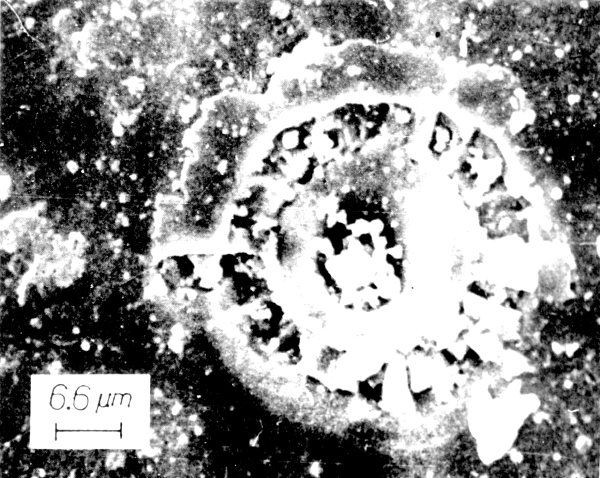
Lunar soil samples that had been hermetically sealed while on the moon and were opened in a sterilized laboratory and immediately examined and photographed in Russia, were subsequently determined to contain the fossilized presence of microorganisms similar to Phormidium frigidum, which live not in Russia but in Shark's Bay, Australia.

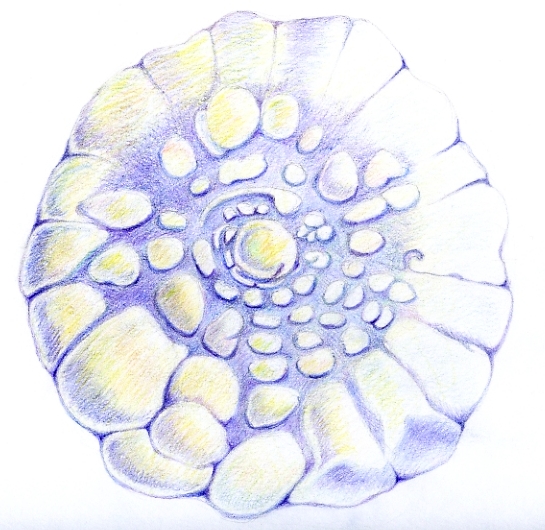
The fossilized impression of a spiral organism was also discovered. Dr. Rhawn Joseph later determined this spiral fossil is very similar to a spiral animals that had become extinct over 600 million years ago. It is not likely that extinct microorganisms or those dwelling in Australia, contaminated lunar soil samples opened and examined in Russia.


The best predictor of the future is the past.

Life on Earth did not emerge from an organic soup or undersea thermal vent. It fell from the sky encased in all manner of stellar debris which pounded the planet for the first 700 millions years after the creation.

The genetic seeds of life swarm throughout the cosmos, and some of these genetic "seeds" fell to Earth, as well as on other planets. And these genetic "seeds" contained the instructions for the metamorphosis of all life, including woman and man.

DNA acts to purposefully modify the environment, which acts on gene selection, so as to fulfill specific genetic goals: the dispersal and activation of silent DNA and the replication of life forms that long ago lived on other planets.


Table of Contents: Astrobiology, Evolution, Origin of LIfe, Panspermia...

Contents: BrainMind.com


Copyright © 2000, 2001, 2002, 2003, 2004, 2005, 2006, 2007, 2008, 2009, All Rights Reserved